Foregiveness
This post specifically relates to platonic forgiveness and relationships, in cases of romantic relationships a lot of this will apply but obviously there will be extra dimensions that matter.
Suppose a friend repeats something you told them in confidence. When you confront them, they apologise. You believe they regret it. You also know you'll think twice before telling them anything private again. You hesitate when they ask whether the two of you are all right. Saying yes seems to promise more than you can offer. They're hoping the friendship will feel normal again; you're still wondering who else knows. There ought to be room to accept an apology while admitting that something has changed. The philosophical difficulty begins here. Forgiveness seems to require a change in our attitude towards someone even when our judgement of what they did remains intact. The betrayal happened. It was wrong, and the person was responsible. Nothing about forgiving them makes those propositions false. There are ways to move on, sure we can be a nihilist but we must care? If we didn't care we wouldn't be here currently. And thinking too much, means that we just go in loops trying to solve issues that we already know the answer accomplishing nothing, increasing stress and with no results (fancy way of describing "overthinking"), how should we look at it? People make mistakes and so do we. Wether we like it or not. If we discovered that they had never betrayed us, we would be correcting a mistake. If we discovered that they had acted under circumstances that removed their responsibility, we would have grounds to excuse them. Forgiveness addresses a harder case: someone did something wrong, they acknowledge it, and we are deciding how to relate to them now. But on a further question what does acknowledgement mean? It must be deeper than just being able to agree with what they did was wrong and how they effected you, if they say this instantly does this make it any different, did they actually think about what they did, how it effected you? if it is too quick you may feel justified that they realised they made a mistake, that they didn't need to be prompted to get to this realisation but is this important? Firstly we do not know what other people are thinking, we may be able to may guesses but we don't know; I also think that this sort of social structure is deeply unhealthy. If you care that this person has hurt you then that is enough of a reason to talk to them about it, I also find it is also never really a simple situation, they may struggle to understand why they acted in that way or did that certain action or said what they said in the moment. These do obviously not take away from your right to feel hurt by the actions of the other person but I often think we stretch too far into this extremist view of them trying to relate them to some sort of psycopathic monster or other analogy in a way to try and justify what they did.
Maybe it isn't simple
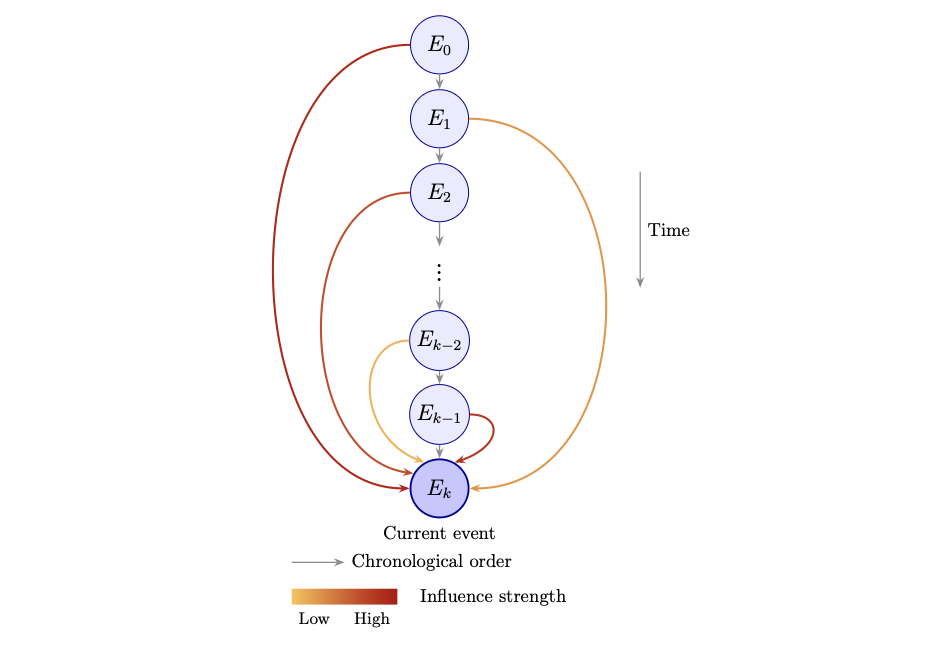
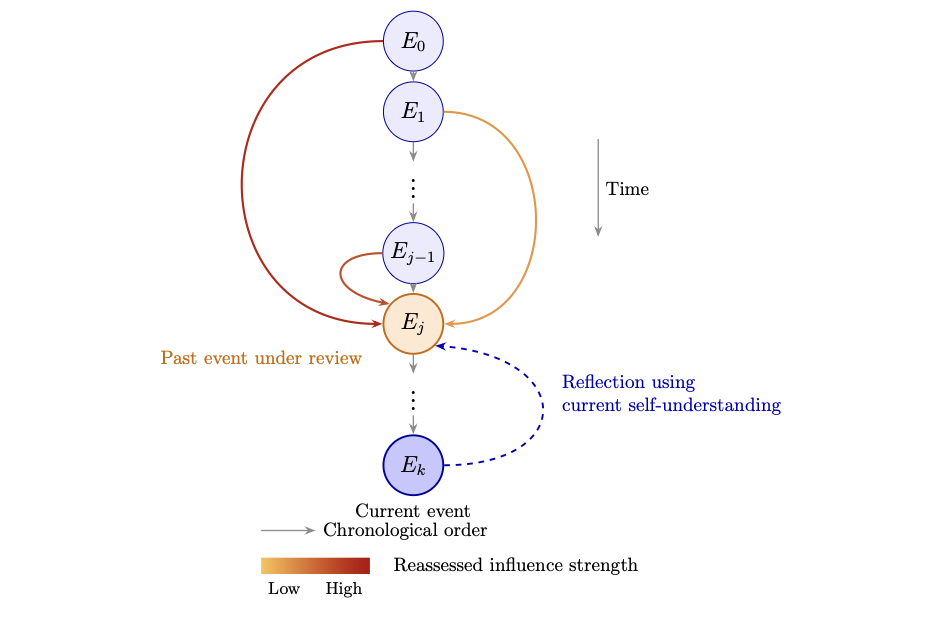
The point I am making here is that often a lot of the time people may be just as confused as to why they did something, someone can do something to hurt you without realising in the moment that their behaviour was misaligned. Furthermore although I do not want to make this post overly math heavy at the extent of alienating some readers: it is almost instant to produce our actions in a state but it is exponentially harder to approximate why we did those actions (in math lingo for our past events we can autoregressively produce our next state but to find the inverse of a given state is impossible and approximating it is exponentially hard). You can reflect on why you did something, why you made a mistake etc but you will never fully know the exact reasons why you did what you did or why they did what they did. Practical examples that I observe are things that we find funny or procrastination; these things may have seemingly obvious solutions i.e: this was just funny or I was being lazy but the actual full reasoning is something we will never fully know, we can approximate it but never solve it.
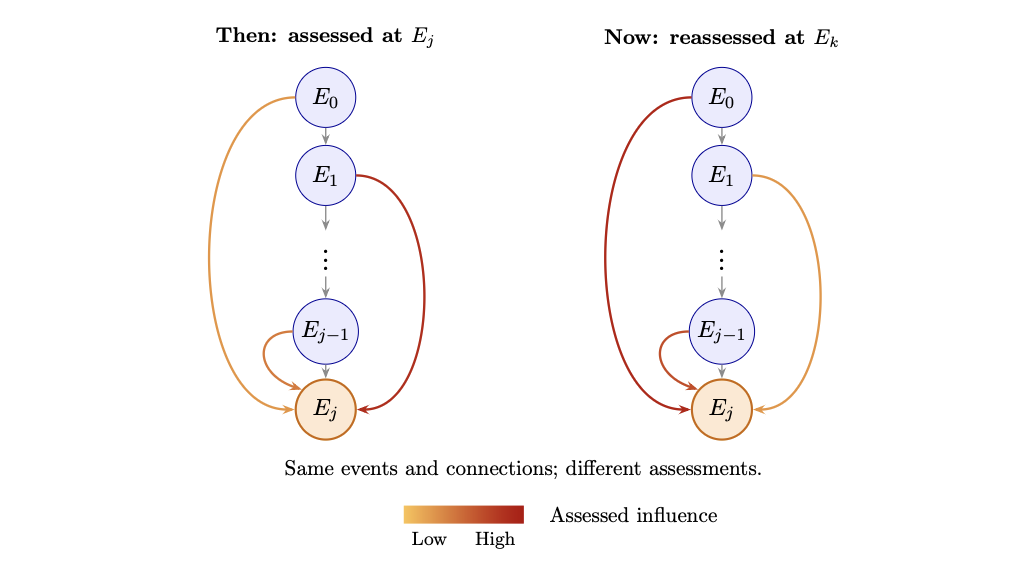
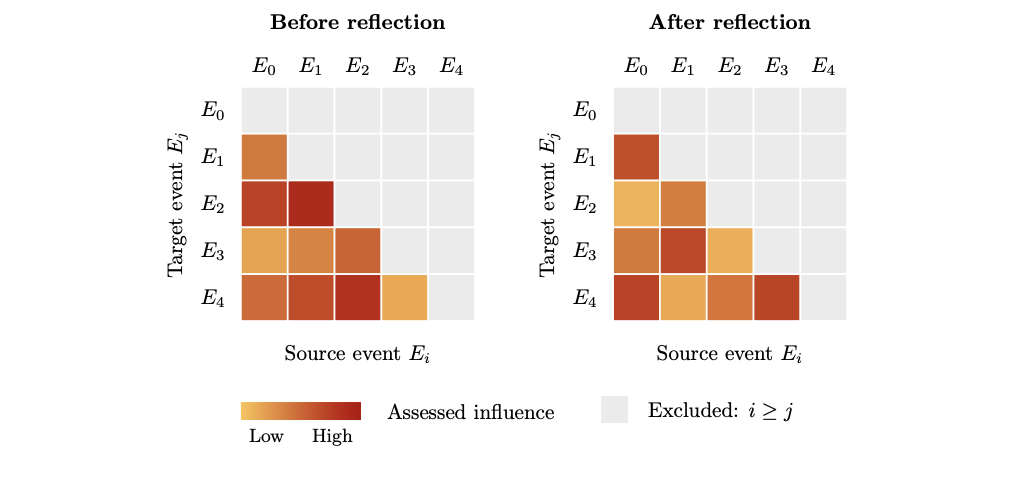
We can update our prior beliefs about what events and reasoning caused us to act in a event but we will never fully know, part of being human is not having the ability to interpret our own neural pathways fully so its stupid to believe that you can understand someone elses fully. Well this presents a pretty dark idea, they hurt us, they may not know why they did it or why they thought what they did was okay. But at the same time this is the way it has always been, even at situations where we have been on the other side of the position. You can be remorsefull for something you have done, accept the consequences and make sure it doesn't happen again without fully understanding why you did what you did, this at a first thought seems insane; how can I ensure I do not do what I did or make the mistakes I did without fully understanding why I did them?
Several questions follow. Resentment may be justified, but we need to decide what would justify relinquishing it? We need an account of responsibility that allows people to change, it is hypocracy to change ourselves but not let others. And we need to explain why forgiveness matters without making it another obligation imposed on someone who has already been hurt. And this example exists in a isolated world, where our friend makes a mistake, what if they hurt us because they have their own serious issues going on? What if their views on the world differ from ours? We can't be mad at someone because they have had different life experiences or can we? There problems arent mine but it doesn't mean that I shouldn't care about their problems, and if I find out after why did they not tell me? In the large majority of these situations it is easy to grow anger, rescentment and blame. Pushing the belief of strong undiagnosed mental disorders (e.g: psychopathy, narceccism etc) as a reason of blame. Aristotle makes a useful starting point because his account of virtue allows anger to have a proper place. In Book IV, chapter 5 of the Nicomachean Ethics, he praises the person whose anger fits the circumstances. Excessive anger is a failure, but so is failing to become angry when anger is warranted. He associates that deficiency with an inability to defend oneself or one's friends against insult. His discussion concerns good temper; it gives us a way to question the assumption that becoming less angry always amounts to becoming better. Aristotle, Nicomachean Ethics, IV.5. This follows as a sub-set of our example of the tail cases on a distribution between pure nihilism and catastrophic overthinking.
Applied to the betrayed confidence, this means the hurt deserves an explanation. You trusted someone with information they were not entitled to share. Your anger registers the difference between a confidence and a story available for anybody's amusement. An immediate, cheerful acceptance of their apology might express generosity. It might also express fear that objecting would make you difficult to like. Outward calm tells us little until we know what produced it. Joseph Butler develops a related argument in his sermons on resentment and forgiveness. He regards resentment against wrongdoing as part of our moral nature. His account allows resentment and goodwill towards the offender to coexist, while rejecting revenge and the excesses of personal anger. Benevolence does not depend on judging everyone innocent. [Butler, Sermon IX, Upon Resentment and Forgiveness of Injuries (https://anglicanhistory.org/butler/rolls/09.html). This suggests a demanding possibility: you can continue to object to someone's conduct while taking their welfare seriously. You can want them to recognise the harm without wanting their life to go badly. It also leaves room for memory. The facts can stand after the anger has faded. Your friend shared something private, and it hurt you. Being able to enjoy their company again doesn't require you to revise either statement. The difficulty is judging when anger has begun to ask for something beyond acknowledgement or repair. An apology can be sincere and still feel insufficient because the person offering it seems too comfortable. You want them to understand, but you also want them to look as miserable as you felt. We can never truly know what someone is thinking, how they feel but we do not need to, things do not need to be binary we can also give space, let them know how we feel. If someone wants to be forgiven they will show it, sometimes it takes time to process and understand and the immediate pressure to apologise can get in the way of this processing. Understanding is hard and often you have to act quickly even when you may not fully understand.
Second wishes?
Friedrich Nietzsche would be suspicious of how easily a wish to punish can acquire the language of virtue.
In the first essay of On the Genealogy of Morality, he describes ressentiment: a form of hostility that becomes creative in producing values, allowing people unable to act against their enemies to achieve an imagined moral victory over them. In section 14, he attacks the way an inability to take revenge can be renamed forgiveness. The hostile desire survives while its owner claims the credit for having overcome it. This belongs to Nietzsche's broader critique of Christian morality, whose historical claims and contempt for weakness need to be assessed separately from the psychological observation. Nietzsche, On the Genealogy of Morality, I.10–14. For an ordinary friendship, the useful question is whether forgiving someone has become a way of keeping them beneath you. Suppose you accept your friend's apology, then mention your generosity whenever you disagree. Their mistake becomes a standing reason for them to defer to you. You have forgiven them, you explain, but they should remember how forgiving you have been. The arrangement gives you something. You retain the friendship while claiming a permanent advantage within it. They can never quite object to your behaviour without appearing ungrateful. Nietzsche's suspicion helps expose what is happening in that example. A person can take pleasure in being the injured party because injury supplies a moral advantage they would otherwise have to earn. A valid grievance can become useful long after the original dispute has changed. There is a danger in applying this suspicion too eagerly. Calling someone resentful can also be an efficient way to avoid answering their complaint. A person who remembers an injustice may be insisting on a fact that everybody else has found convenient to overlook. Their anger cannot be dismissed merely because it has lasted longer than the audience's patience. The distinction depends on what is being sought. Asking someone to correct a lie they told about you has a clear object. Requiring them to remain ashamed whenever they see you is harder to defend. Once their apology has been accepted, repeatedly using it to win unrelated arguments gives them little opportunity to become your equal again.
Forgiveness becomes credible when it changes that behaviour. You allow an unrelated disagreement to remain about its subject. You stop treating every mistake as further evidence for a case you have already decided. Their past conduct remains relevant where it bears on the present, but you are willing to explain that relevance. Even a generous response cannot restore the moment before a betrayal. Other people now know the secret. The friendship has a history it did not have before.
Gifts give
Hannah Arendt begins from this problem of irreversibility. In The Human Condition, she argues that our actions enter a world of other people, where their consequences can exceed what we intended or foresaw. Forgiveness offers release from a sequence of reactions that would otherwise keep us bound to a past deed. She pairs it with promising: forgiveness addresses what we cannot undo, while promises give some stability to an uncertain future. Arendt, The Human Condition, section 33, excerpted in “The Faculty of Forgiving”. For the friendship, this offers a reason to forgive that goes beyond the hope of feeling calmer. You might want the person who behaved carelessly to have a chance to behave with care, and you might want a relationship in which both of you can do something other than repeat the argument. That requires allowing new conduct to count as evidence. If every considerate act is dismissed as manipulation, while every thoughtless act confirms what you already believe, your friend has no way to change your judgement. You have made a decision about their character that experience is no longer permitted to challenge. Sometimes a settled judgement is warranted. Repeated betrayals can give you enough information to end a friendship. You do not owe someone an indefinite series of opportunities. But continuing a relationship while refusing in advance to recognise improvement places both people in an exhausting position.
Time heals all
Arendt's pairing of forgiveness and promises also helps explain why accepting an apology and restoring trust can happen at different speeds. Her argument concerns the conditions of human action; applied to this example, it suggests that a new beginning needs something to support it. Your friend can agree to ask before sharing anything about you. You can decide what you feel comfortable telling them. Over time, their handling of those smaller confidences gives you a reason to revise your expectations. The one things that none of us can have more of is time (and before you try and argue this point fully think it out and you will reach this conclusion), someone willing to spend time to improve themselves and recognise the hurt they caused even if it may not be immediate (recognising reasons of "why" is hard) is a gift that shouldnt be taken for granted.
A promise is open to being kept or broken. It makes a claim about future behaviour that you can assess. Repeated declarations of regret, however moving, cannot do that work on their own. There is uncertainty here that neither person can remove. You cannot know with certainty that your friend will keep the next confidence. They cannot know when you will feel comfortable giving them one. A renewed friendship has to tolerate that unevenness without treating it as evidence that the apology failed. An apology seems like an obvious condition for forgiveness. It establishes that the person recognises the wrong and gives you some reason to believe they will behave differently. Jacques Derrida questions whether forgiveness can be understood entirely through such conditions. In “On Forgiveness”, he distinguishes unconditional forgiveness from exchanges organised around repentance or reconciliation. His provocative formulation is that forgiveness concerns the unforgivable: it addresses a wrong that still resists justification. Forgiveness would lose its distinctive force if it only applied after the grounds for condemning someone had disappeared. He also insists that unconditional forgiveness and the practical conditions of social life remain inseparable, despite the tension between them. Derrida, On Cosmopolitanism and Forgiveness, pp. 32–45.
This argument leaves us with a difficulty rather than a rule for handling every injury. Repentance matters enormously to the prospect of living with someone again. Yet there seems to be something generous in forgiveness that cannot be reduced to a payment received after the offender has satisfied every demand.
Consider two possibilities within the friendship. In one, the apology leads to changed behaviour and you slowly feel able to confide again. In the other, the friend never properly apologises, and you decide to stop seeing them. Years later, you find that you can wish them well. You still think they behaved badly, and you still prefer to keep your distance. Ordinary speech can accommodate forgiveness in both cases, although they involve different changes. The first includes the repair of a shared relationship. The second concerns an attitude towards someone with whom a shared relationship may no longer be possible. This is one reason a promise of renewed closeness asks for more than forgiveness alone can supply. Wishing someone well does not establish that they are trustworthy. Their remorse does not determine what you can comfortably discuss with them.
It is also a reason to be cautious about treating forgiveness as a transaction with a guaranteed result. Someone can make the apology they owe, correct what they can, and still receive an answer they dislike. The injured person has a say in what happens next. Any account that removes that freedom has made forgiveness too convenient for the person seeking it. The missing apology creates a different problem. You may be willing to forgive, yet feel unable to do so while the other person insists that nothing happened. Part of what you want is agreement about the past. You want them to acknowledge the confidence, the decision to share it, and the consequences. Without that acknowledgement, the dispute extends into the present. They are still asking you to accept an account of events in which your complaint has no place. Continuing to object can therefore be reasonable. Time passing does not settle a disagreement about what happened. Still, the wish for acknowledgement can occupy more of your life than you intended. You rehearse a conversation in which your explanation is finally clear enough. You find another example, a better phrase, a way of describing the hurt they will be unable to dismiss. At some point, the possibility has to be considered that they already understand enough. Their failure to acknowledge it may have little to do with how well you have explained yourself. You can stop trying to persuade them while continuing to believe your account. There may be people whose recognition matters and whose conduct you can trust. You can speak to them, make decisions about future contact, and leave the other person's agreement uncertain. Whether that should be called forgiveness will depend on what else changes. Simply becoming tired of an argument seems different from recovering goodwill towards the person. There is no need to force every tolerable outcome into the same word. Nor does refusing forgiveness have to become a permanent declaration. You can leave the question unanswered while deciding how to live now. The demand for a final moral verdict often arrives much sooner than the understanding needed to give one.
These arguments become less comfortable when you imagine yourself as the friend who betrayed the confidence. You know the circumstances. You were trying to be entertaining. You spoke before considering what the story would reveal. You have kept other confidences, sometimes at a cost to yourself, and you wish those occasions would count too. They should count in an assessment of your character. They cannot make this particular disclosure disappear. Responsibility requires staying with that particular act long enough to understand it. A broad statement that you are a terrible person can be strangely evasive. It invites the injured friend to disagree, reassure you, and start listing your better qualities. Soon the conversation is about whether you deserve to feel bad, while the information you shared remains unaddressed. A more useful apology gives an account of what you did and recognises what was yours to decide. If you can correct a misleading impression or ask the people you told to stop repeating the information, you do so. You accept that your friend may change what they tell you. Nothing is ever simple, and in the example of betrayal we he candidate size 1, we can never do a significant enough AB test. But they can realise what they did even if it was effected by issues outside of there control. Then comes the difficult waiting. You have acted, but you cannot decide how the apology will be received.
The wish to forgive yourself belongs somewhere in this picture, provided it leaves the other person's judgement intact. You can give up the belief that you are incapable of becoming more trustworthy. You can behave differently without requiring the injured person to supervise that change or reward it with renewed closeness.
That is a commitment you can keep even if the friendship ends.
A defensible account of forgiveness has to take both people seriously. The person who was hurt needs room to remember and judge what happened. The person who caused the hurt needs the possibility of being judged on what they do afterwards as well.
You can't change the past

Those interests will not always produce reconciliation. Sometimes the relationship ends because too much has happened, or because one person continues to do the thing for which they keep asking forgiveness. Goodwill can survive that ending, but goodwill alone cannot make a friendship workable.
Where a friendship does continue, its future will consist largely of ordinary encounters. You talk about something unrelated to the injury. A disagreement occurs, and neither of you uses the old apology to settle it. Your friend asks before repeating a story about you. Gradually, there is more to the relationship than the event that interrupted it.
The past remains available to memory. It no longer has to supply the subject of every conversation. When that friend next asks how you've been, you can decide how much to tell them. An answer that is warm but careful may be exactly what the relationship can support. There is time to see what they do with it.
Endnote
Sometimes the person who wishes to be forgiven for what they have done may not be able to communicate with the person they hurt, how do they deal with this? Someone can be kind, nice and respectful but not say that you are forgiven. Maybe it is on the person who caused hurt to forgive themselves, even if I am told im forgiven but I do not see change in myself then am I really? And what if you never speak to the person you hurt again? How do you deal with the fact that someone can mean a awful lot to you yet they want nothing to do with you because of your actions? This is a very real problem, it can be hard to move on without them knowing how you feel, that you acknowledge your mistakes and wish to make ammense. And this is true, but I can not change the past, no matter how much I may want to. I have to make ammense with myself for my actions, people are experiences not possesions I can love someone so much yet know that we grew apart and the most meaningful thing I can do is grow in the direction they would want me to. Even if they never see it!